
From Wellesley Magazine, The Artist as Critic (2017)
“Lorraine is an equal opportunity critic. Her genius is that she doesn’t preach; she trusts your capacity to see and understand and learn from her work.” — Robert Ransick, artist, designer and educator
“She plumbs her own experience, but she’s also exploding the boundaries between art and life, self and family, personal and political. That makes her deeply current.” — Rujeko Hockley, curator
“She’s dealing with complex issues that she never allows to resolve into an easy solution. That’s a paradigm that younger artists, especially those marginalized by society, find inspirational.”—Jarrett Earnest, writer
“Lorraine showed that a work can be both in the street and avant-garde, reminding us that the two never were mutually exclusive.”— Zoe Whitley, art historian and curator
– Wellesley Magazine, link here
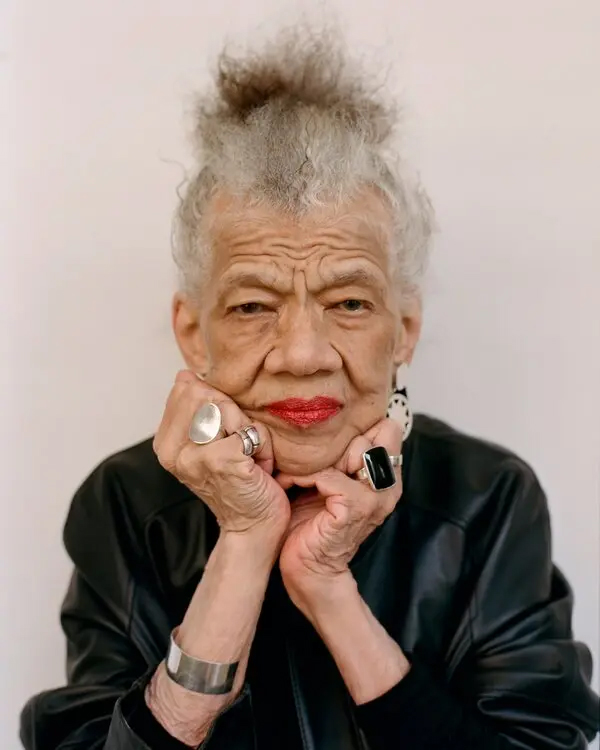
Lorraine O’Grady, 2020. Photograph by Lelanie Foster for The New York Times.
From Duke Up, Writing In Space 1973-2019, Aruna D′Souza ed. (2020)
‘O’Grady’s approach of ‘writing in space’ has allowed her to build a theoretical foundation for her practice (to work out what she wants her art to do) and to prepare the ground for its reception (to give viewers of her work the tools to see what she saw).”
‘As an artist and a writer, she has always been very conscious of the notion that her ideas have come too soon, before others could see the theoretical landscape she was traversing.”
“Rejecting either/or-ism and embracing both/and-ism was and continues to be, for O’Grady, the most urgent task in the fight against white supremacy.”
“One of the enduring ‘both/and’ qualities of O’Grady’s practice is her ability to offer both seriousness and joy, pleasure and critique, beauty and politics in a single experience—dualities that are most often thought of as contradictory or mutually exclusive in contemporary art, as she has noted in the past.”
“Over the past forty-plus years, whether she was operating in performance, conceptual photography, the moving image, collage, or the written word, text and image have played mutually supporting and endlessly complicating roles in O’Grady’s groundbreaking and prescient work: they reinforce and undermine each other, illuminate and complicate, contradict and explain, resolve and explode.”
– Writing in Space, link here
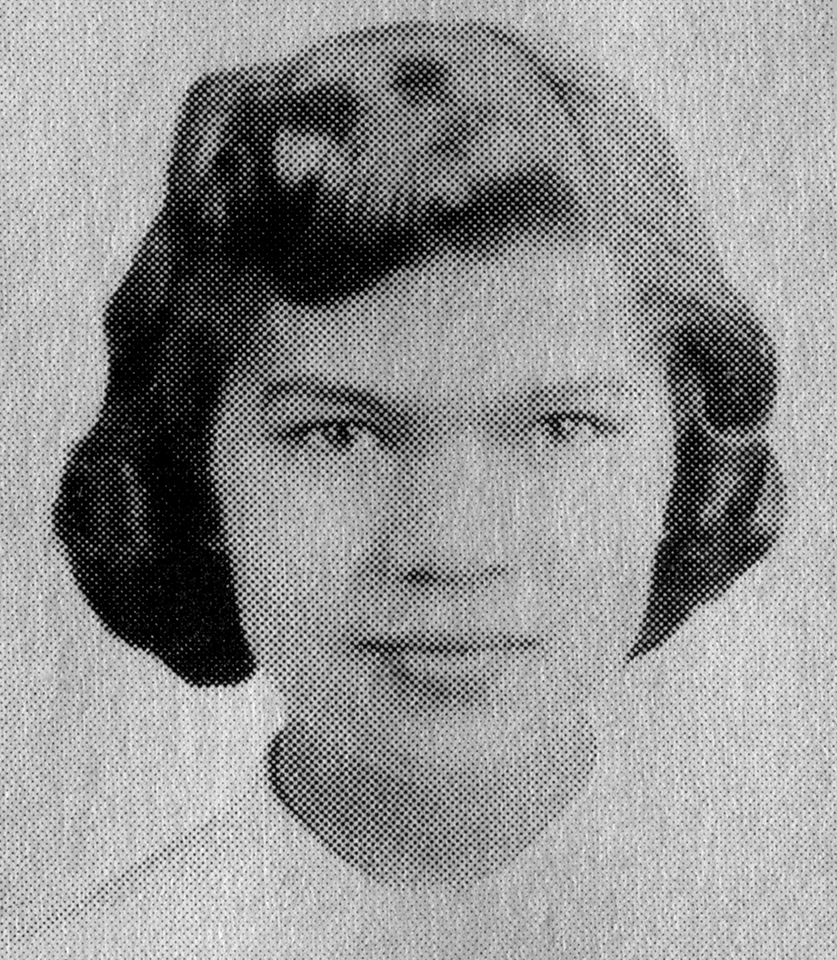
O’Grady in the Wellesley Freshman Book 1951-52.
From Hyperallergic, Lorraine O’Grady, in All of Her Literary Brilliance, Alexandra M. Thomas (2020)
“Lorraine O’Grady is a pivotal figure of the Black American avant-garde—a performance artist, conceptual artist, Black feminist provocateur, and cultural critic.”
O’Grady encourages us to sit with difference, which illuminates a path for grappling with hybridity and diaspora, subjects deeply familiar to the artist as the daughter of Jamaican immigrants, raised in a small Caribbean community in Boston.”
“As if theorizing from another planet and thus truly ‘in space,’ O’Grady’s ideas have been considered uncanny before becoming widely accepted years later.”
“Whether it is the solitude practice of cutting the newspaper and assembling collaged poems or it is a guerilla-like intervention that includes a bold critique of the Black art establishment, O’Grady experiments with the possibilities of language.”
– Hyperallergic, link here
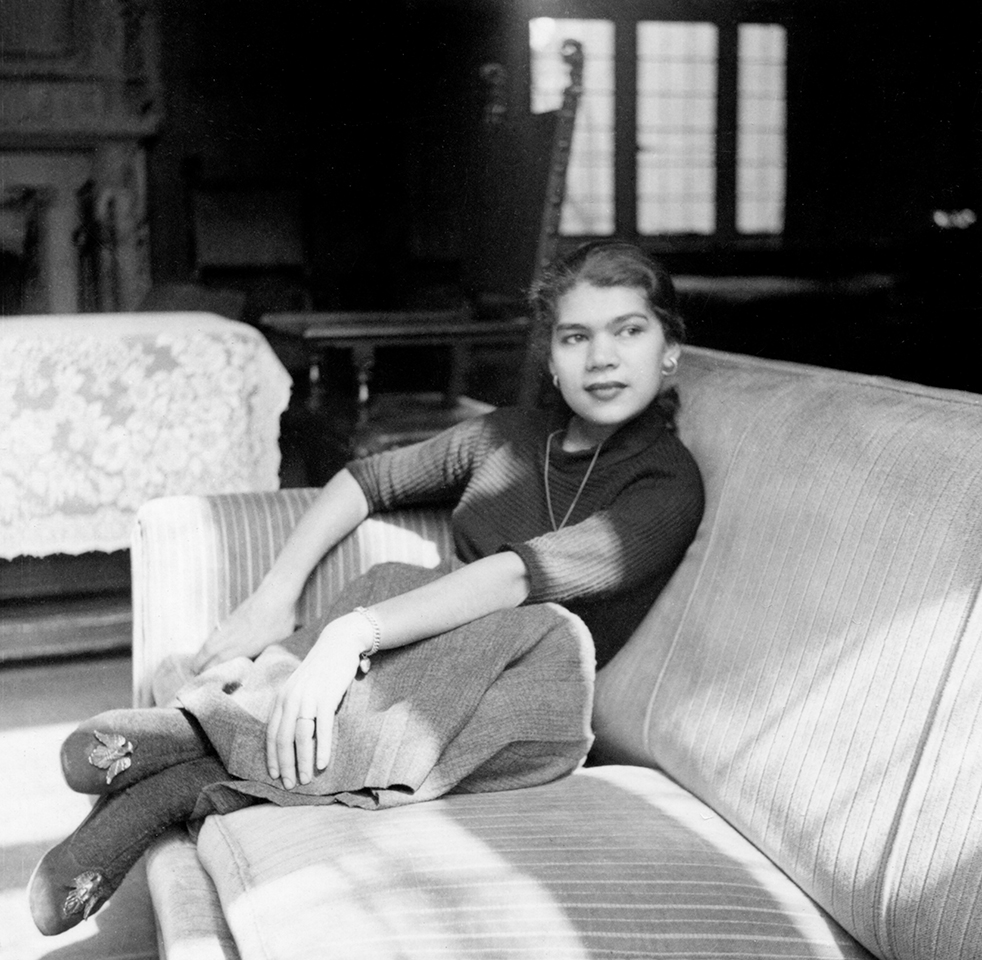
O’Grady at the International Student House, Washington, DC. in 1956. Photograph by Assefaw Leggese.
From Artbook, Lorraine O’Grady: Both/And (2021)
“O’Grady’s unique life experiences, as well as her identity as a diasporic subject, have informed her multidisciplinary practice across live performance, video, photomontage, public art and cultural criticism.”
– Artbook, link here
From The New York Times, Lorraine O’Grady, Still Cutting Into the Culture, Siddhartha Mitter (2021)
“For four decades she has played a pivotal role, clearing her own terrain at the hinge of feminist, conceptual, and Black art. She burst on the scene with performances that would acquire a gloss of legend.”
“Her work spans collage, photomontage, video, and cultural criticism—a voracious and eclectic practice, mixing image and word, theory and play.”
“I would not be who I am without Lorraine.” —Simone Leigh, artist
– The New York Times, link here
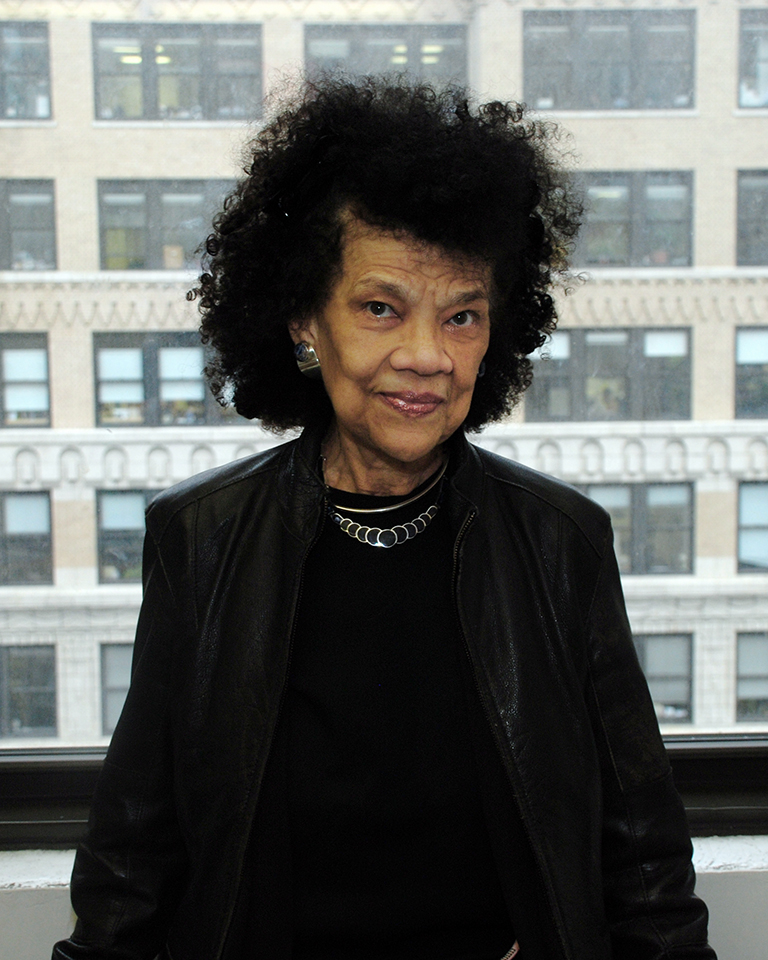
O’Grady at the offices of Artforum magazine, New York City, 2009. Photograph by David Velasco.
From The New York Times T-Mag, Both Sides Now – In Conversation with Lorraine O’Grady, Kate Guadagnino (2021)
“She’s thinking about how these larger forces, whether the force of history or of institutions or of language itself, are caught in those same sorts of contradictions that she feels personally.” —Catherine Morris, curator
“[Catherine] Morris considers O’Grady to be a crucial bridge between the conceptual artists of the ’60s and ’70s and the Pictures Generation that followed.”
– The New York Times T-Mag, link here
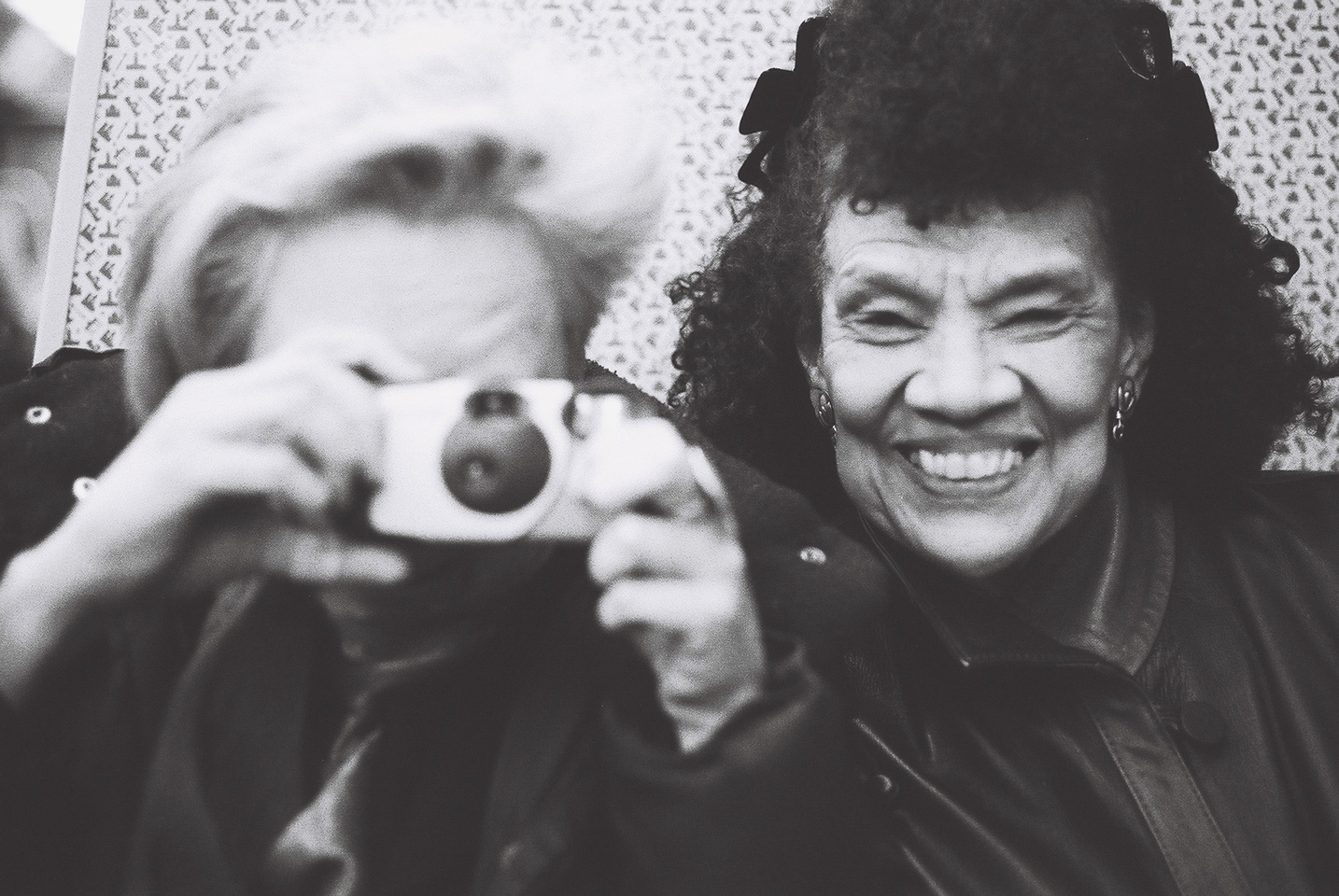
O’Grady and Martha Wilson in Berlin during the re.act. feminism exhibition at Akademie der Künste in 2008.
From Artforum, Risk Everything, Catherine Damman on the art of Lorraine O’Grady (2021)
“While hyperattentive to the past, O’Grady’s project has never been to rescue individual figures from the ash heaps of history. Rather, hers is an ongoing attempt to interrogate the system that effects—perhaps requires—that very evanescence.”
“Like Spillers’s grammar and Damas’s syntax, O’Grady’s artistic operations are more often than not linguistic—enjambments of the world-historical and the intimate.”
“O’Grady’s genius lies in her willingness to embody speculative, treacherous conjunctions cresting the edges of comprehension.”
– Artforum, link here
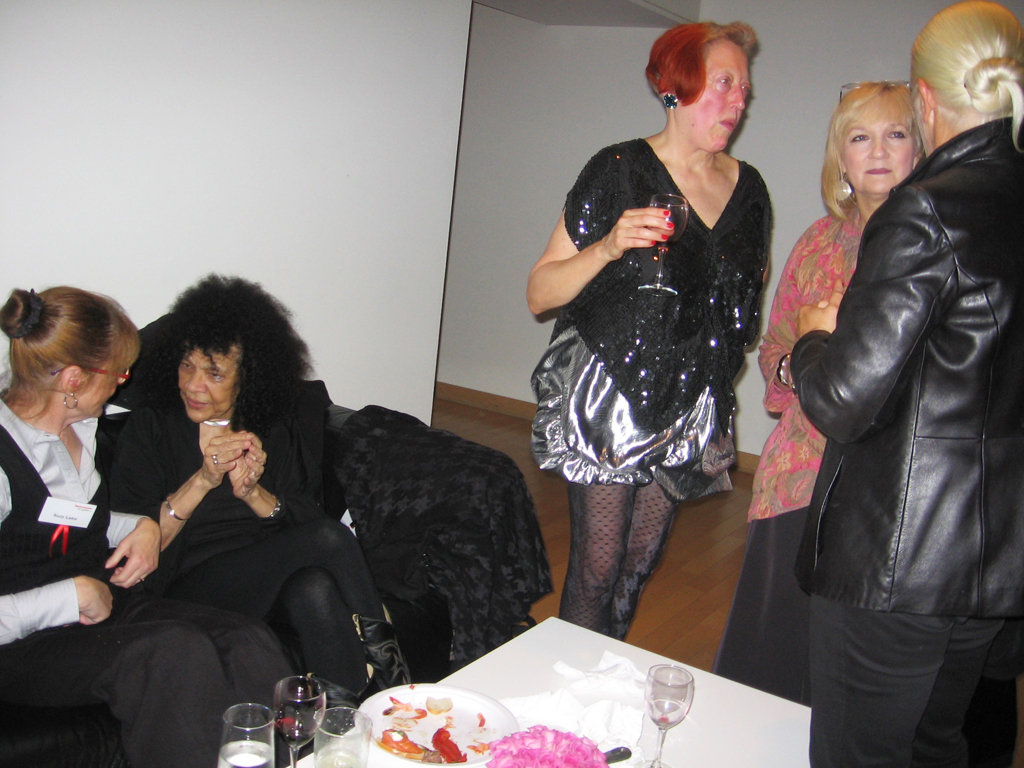
WACK! Art and the Feminist Revolution after party in Vancouver, 2008. O’Grady with the artists Suzy Lake, Martha Wilson, Griselda Pollock and Harmony Hammond.
From New York Vulture, Just Watch Me —More than four decades into her trailblazing Gareer, Lorraine O’Grady Finally Has the World’s Attention, Jillian Steinhauer (2021)
“Through every medium and subject, she has built a body of work that asserts two key ideas: the centrality of Black women and their stories and the ways in which hybridity—of people, cultures, ideas—has shaped the modern Western world.”
“She created a way of seeing that was very supportive to everything I was trying to do.” —Simone Leigh, artist
“The thing that feels so distinctive about Lorraine is she confounds so many different people’s expectations.” — Zoé Whitley, curator
– New York Vulture, link here
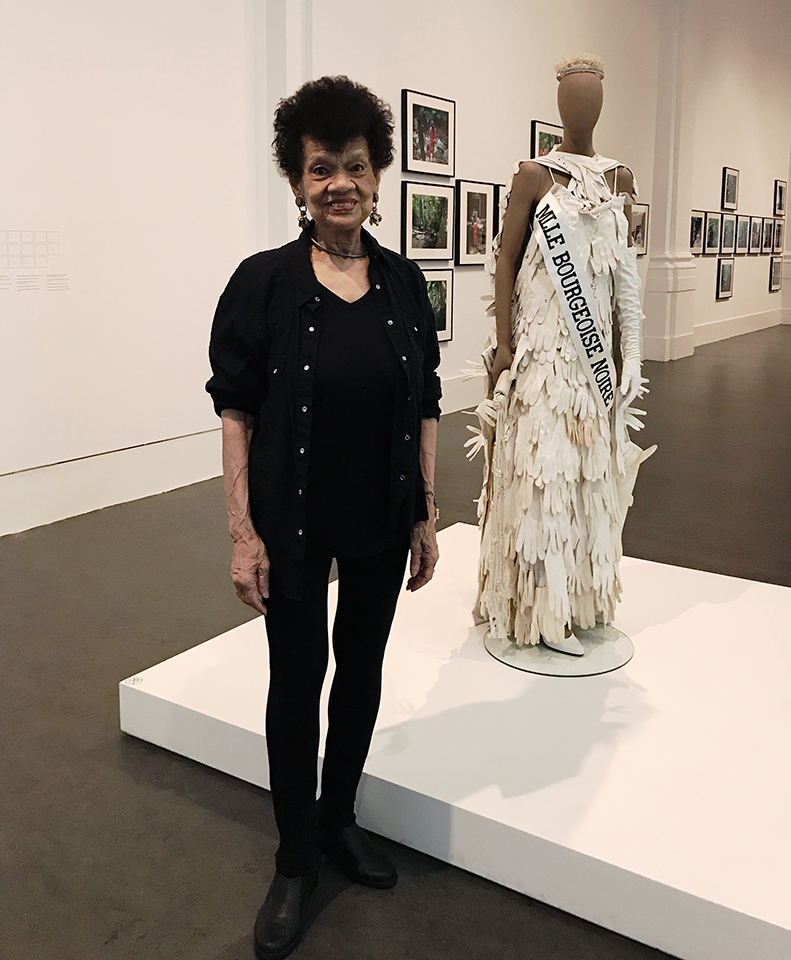
O’Grady with the Mlle Bourgeoise Noire dress at the “We Wanted a Revolution: Black Radical Women, 1965-85” exhibition at Brooklyn Museum in 2017.
From Art in America, Meditations on the History of the Present, Christina Sharpe (2021)
“For nearly a half century, Lorraine O’Grady has produced a profound body of art and writing that reckons with and contests the logics of anti-Blackness, coloniality, and extraction that underpin cultural institutions.”
“O’Grady has a long engagement with multiple philosophical, art historical, and literary traditions and with Black diasporic life and thought.”
“Her publications, conversations, and interviews are witty and sometimes biting, interested, perceptive, generous in thought, and aware always of what language can or might do and make.”
“…O’Grady’s reading of the Black woman in the background of Manet’s Olympia—a professional model whose name was Laure—is among the first examples of sustained attention paid to the Black female figure in Western art.”
“Part of what O’Grady accomplished in that tremendous work was to teach us how to see: that specific painting, art history’s continued erasures and framings of Black female bodies, the West’s deadly either/or logics.”
“If O’Grady’s 1992/1994 critique was an outsider’s challenge to academic processes of canonization, when I reencountered her body of work recently, it served as an invitation to assess the past and present.”
“O’Grady’s orientation to the world involves fierce intelligence, wit and humor, curiosity, anger (which she calls her ‘most productive emotion’), determination, beauty, an ear for language, and a commitment to ‘contribut[ing] to the task of creating a climate of questioning and refusal.'”
– Art in America, link here
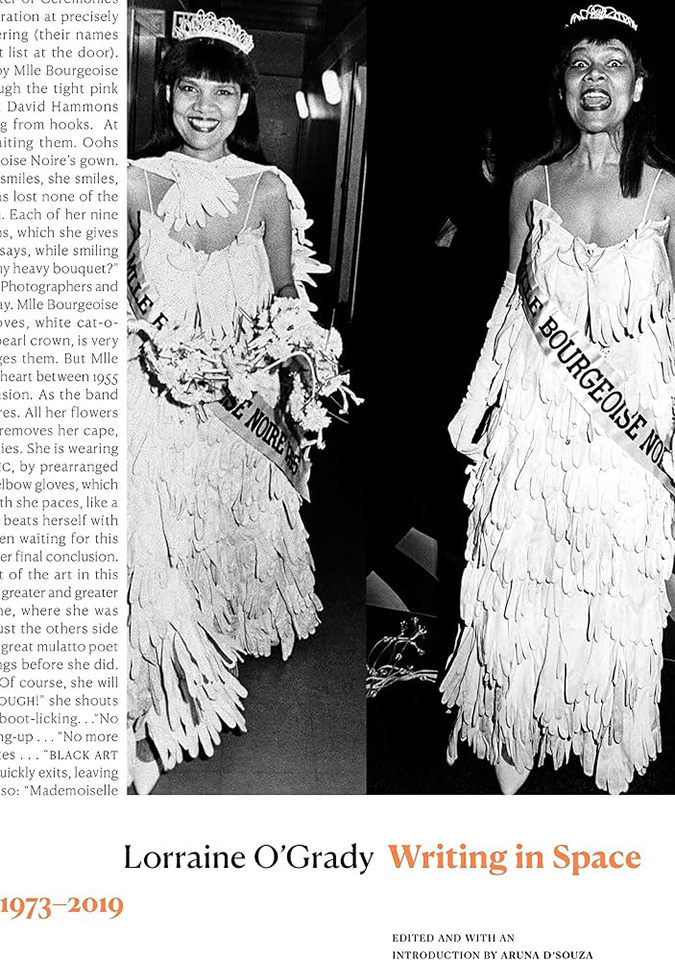
Cover of Lorraine O’Grady: Writing in Space, 1973–2019, edited by Aruna D’Souza.
From Observer, Lorraine O’Grady Retrospective at Brooklyn Museum Honors Long Career, Anni Irish (2021)
“…O’Grady’s conceptual practice has forced difficult conversations within the art world while also bringing light to systems of oppression.”
“Through integrating her own personal history and personhood, the larger sociocultural history of race, gender, and class, and challenging notions of otherness, feminism, the role of museums and other themes, she has created works that live well beyond the time and context they were created under.”
(In reference to Mlle Bourgeoisie Noir): “This performance was quite literally O’Grady’s way of bursting onto the art scene.”
– Observer, link here
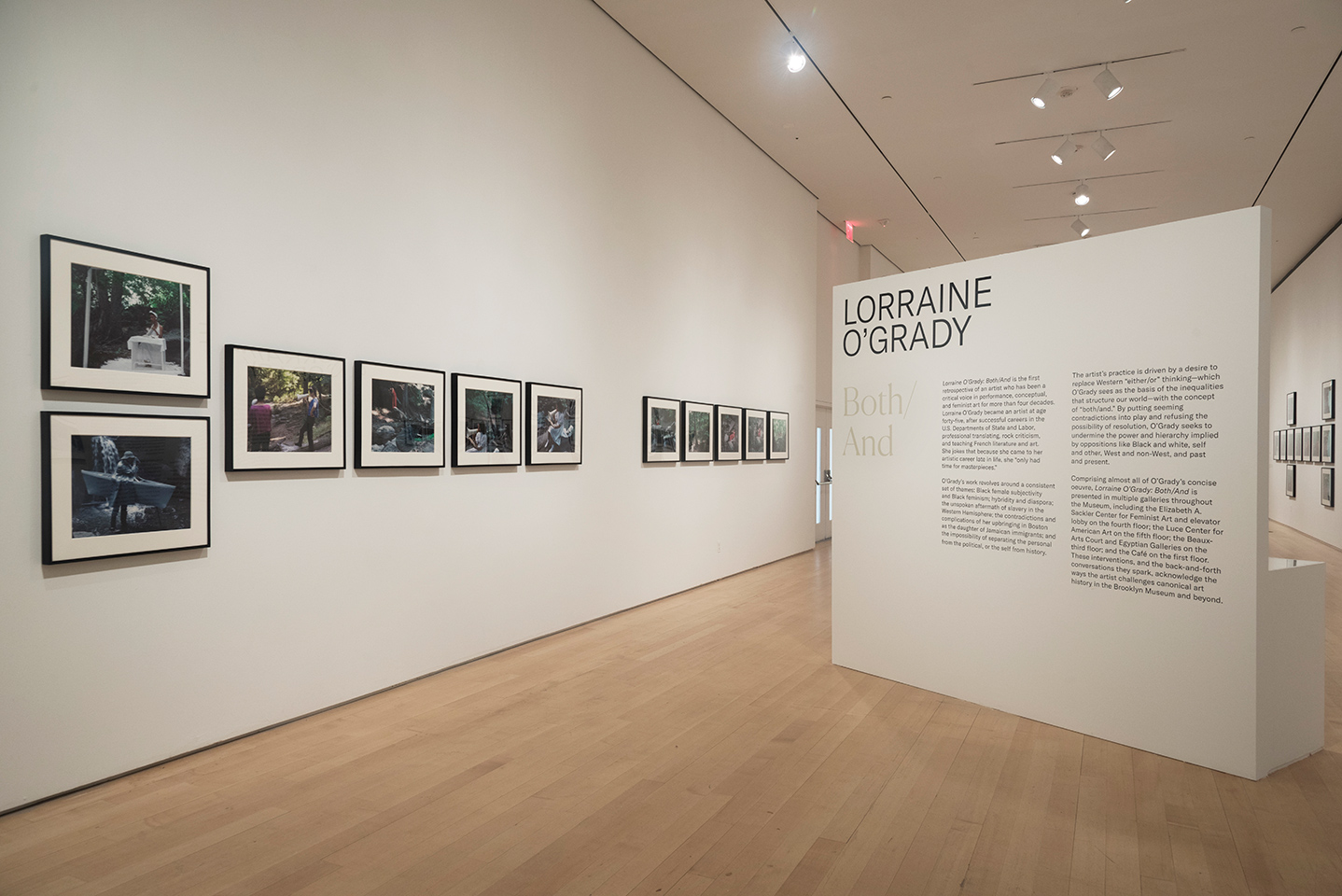
Lorraine O’Grady: Both/And, installation view at the Brooklyn Museum in 2021. Photograph by Jonathan Dorado.
From Collector Daily, Lorraine O’Grady: Both/And @Brooklyn Museum, Loring Knoblauch (2021)
“…across her four decades of art making, she has been first and foremost a sophisticated and incisive thinker, particularly about race and gender, who has then employed a range of different mediums to wrestle with facets of Blackness and her own place in the world as a Black woman.”
“…O’Grady both probes her own identity and uses it as raw material for broader studies of the psychological tensions and conflicts that surround the Black female body.”
– Collector Daily, link here
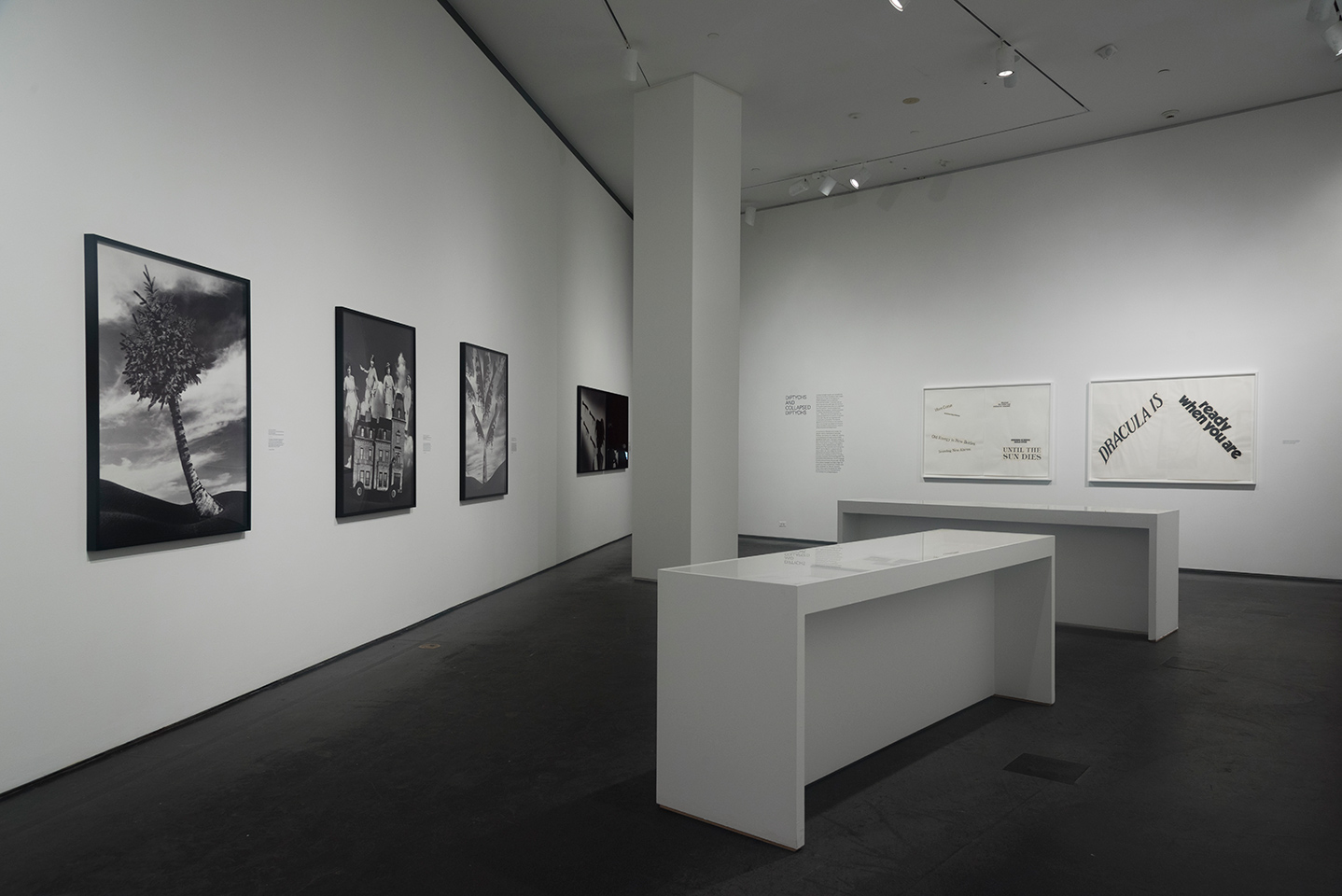
Lorraine O’Grady: Both/And, installation view at the Brooklyn Museum in 2021. Photograph by Jonathan Dorado.
From Collector Daily, Lorraine O’Grady, Body Is the Ground of My Experience @Alexander Gray, Loring Knoblauch (2022)
“…a multi-talented artist whose lasting artistic importance had been under-appreciated.”
– Collector Daily, link here
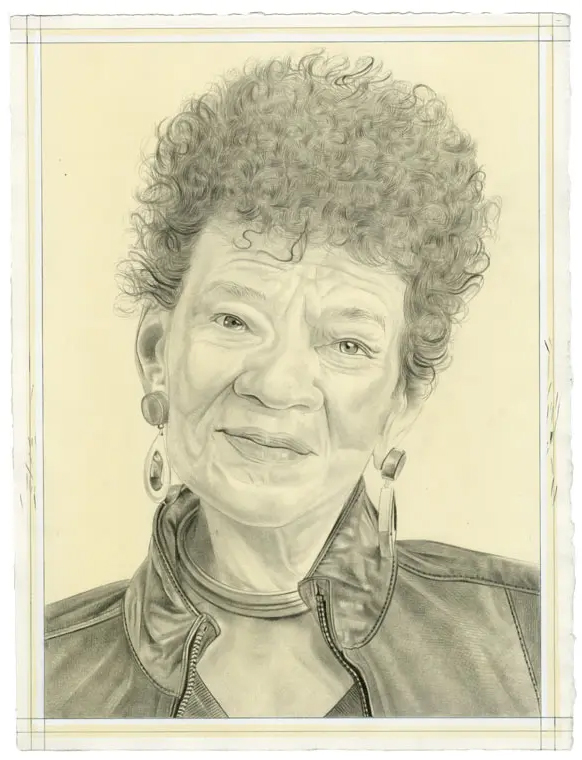
Portrait of the artist Lorraine O’Grady for The Brooklyn Rail, 2016. Pencil on paper by Phong Bui, based on a photograph by Taylor Dafoe.
From Aware Women Artists, Lorraine O’Grady, Stephanie Sparling Williams (2022)
“Performing a dual critique on segregated New York art spaces and fellow Black artists, MBN first appeared at Just Above Midtown Gallery, an experimental hub for black performance artists, where she demanded more from the artists present at the opening for Outlaw Aesthetics (1980), and rebuked them for pandering to white audiences.”
– Aware, link here
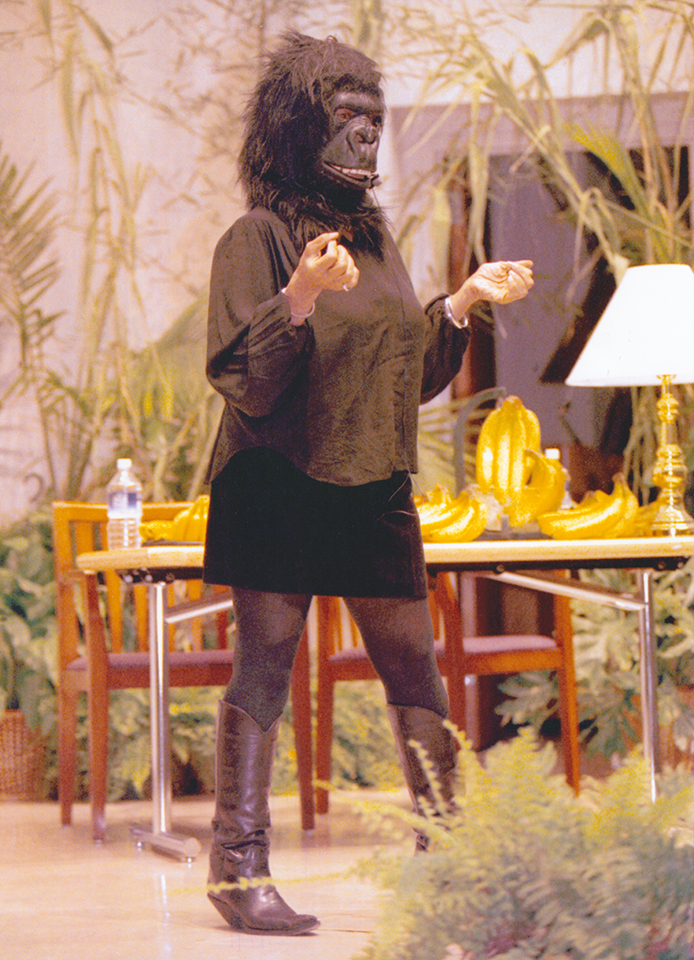
O’Grady as Guerrilla Girl Alma Thomas, her pseudonym while a member of the Guerrilla Girls.
From Frieze, Jacopo Crivelli Visconti’s Top 5 Works on Frieze Viewing Room (2022)
“Despite the long overdue visibility and attention her work has finally received in the last few years, I think Lorraine O’Grady’s importance is still to be largely recognized by a large audience. To me, her Miscegenated Family Album (1980/1994) is nothing less than one of the masterpieces of 20th Century American Art.”
– Frieze, link here
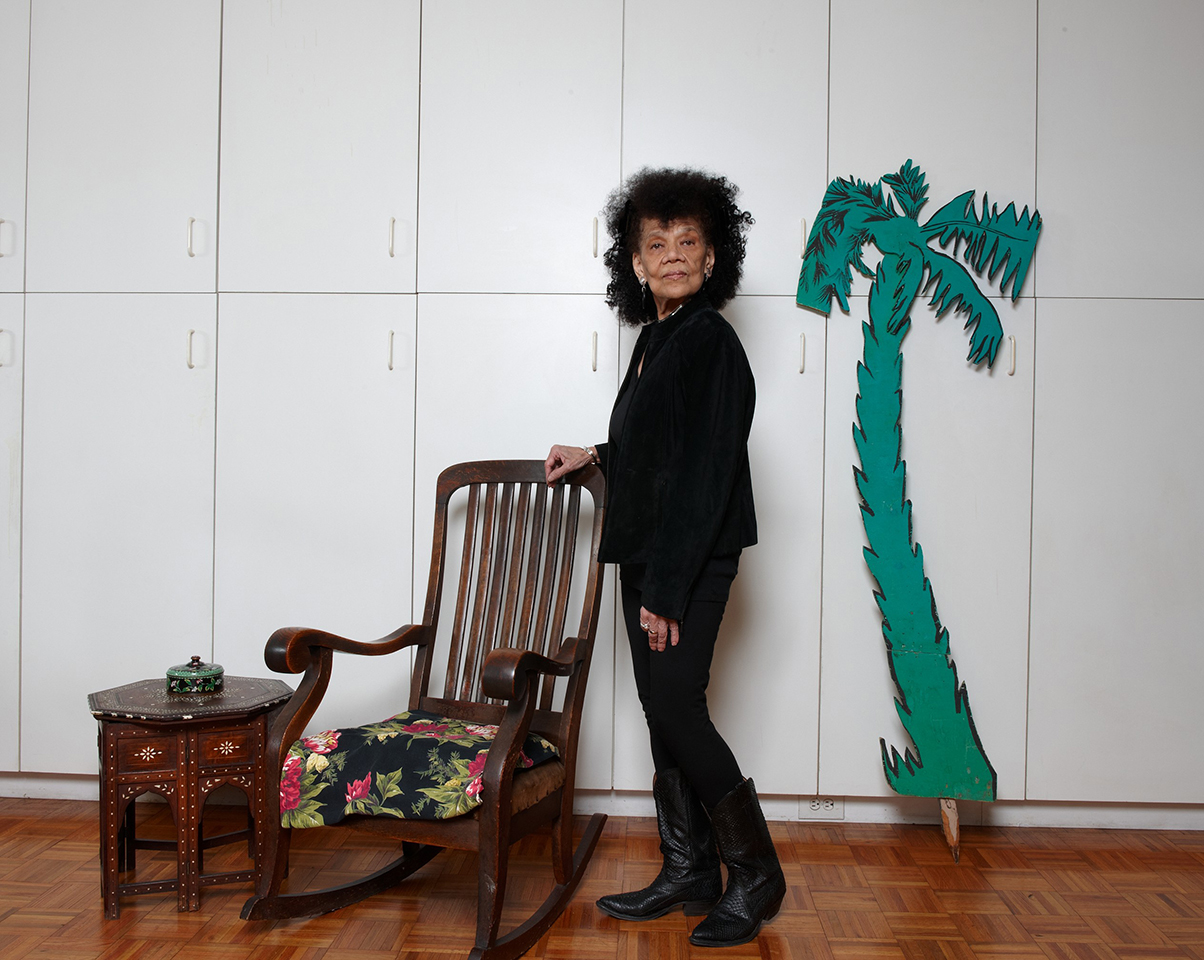
Portrait of O’Grady by photographer Jason Schmidt, V Magazine no. 64, Spring 2010, p. 104.
From The New Yorker, Lorraine O’Grady Has Always Been a Rebel, Doreen St. Félix (2022)
“I can say that she is a legend of extraordinary magnitude, precisely because her legend has resisted being flattened, tokenized, ossified.”
“Although O’Grady excelled in the bourgeois space, she always knew that she did not belong there—that she was an other within the class of others.”
“…a rock star to younger viewers.”
– The New Yorker, link here
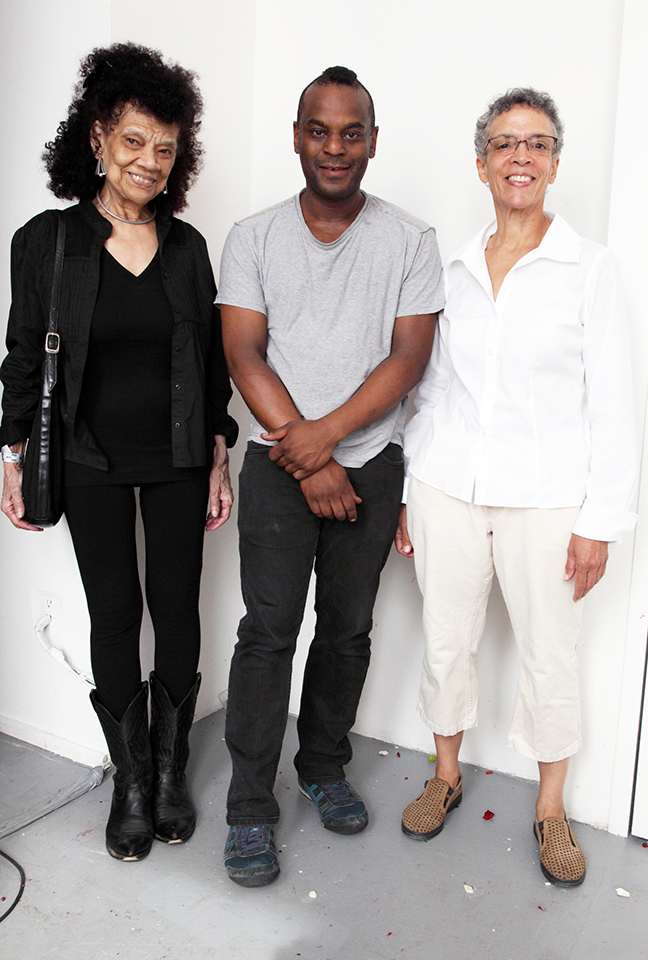
O’Grady with Clifford Owens and Maren Hassinger after Owens performed O’Grady’s performance score Xenosphere at MoMA PS1 in 2011.
From ff2 Media, Artist Lorraine O’Grady’s Both/And Philosophy Rings True, Julia Lasker (2023)
“To Lorraine, the diptych embodies her both/and philosophy because it contains two different images and therefore two different ideas together in harmony, rather than set apart.”
“From her protests to her conceptual art pieces, Lorraine O’Grady is one of the most influential creators and one of the most powerful thinkers of our time.”
– FF2 Media, link here
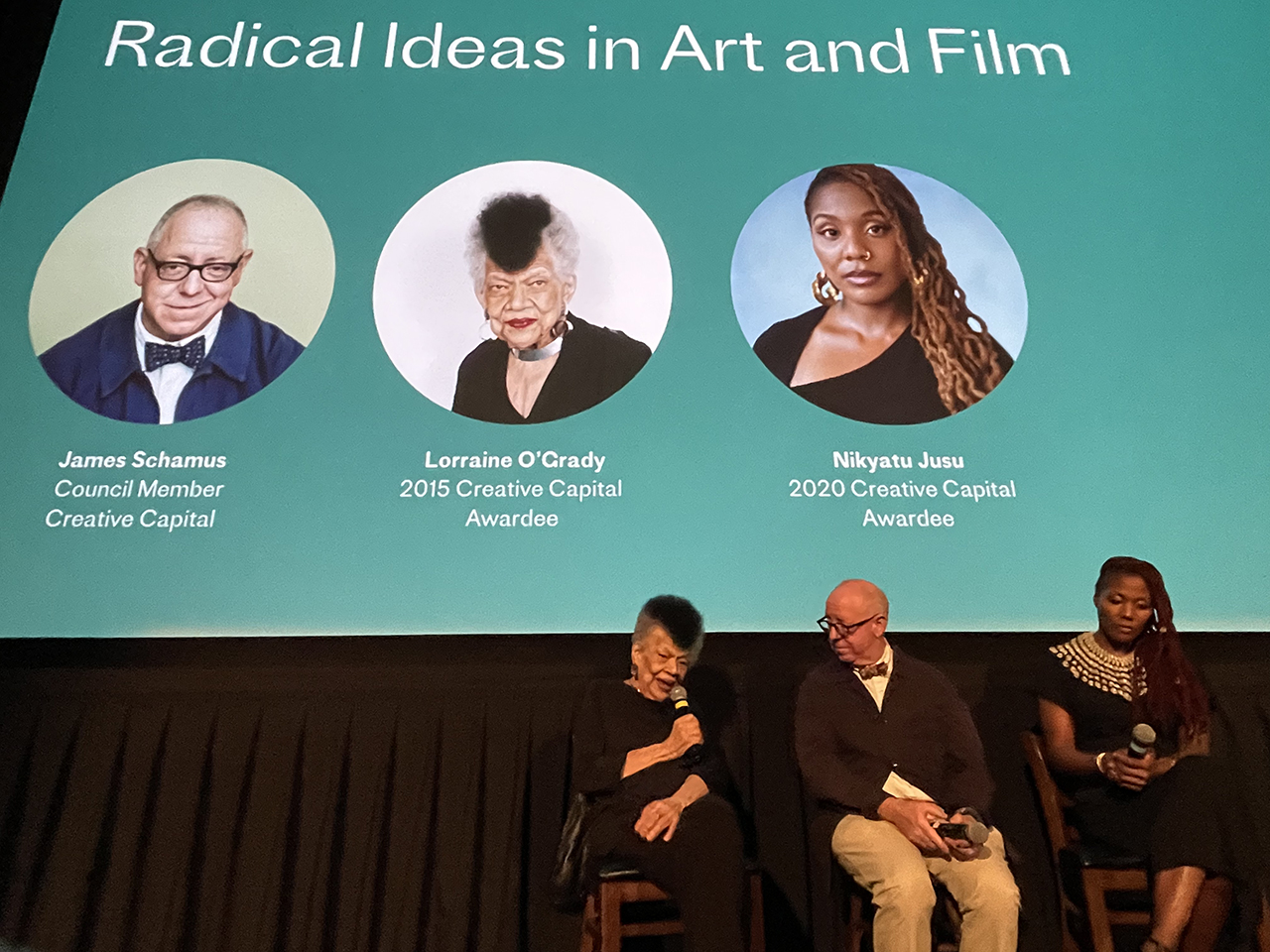
Radical Ideas in Art and Film panel discussion featuring O’Grady, filmmaker and writer James Schamus and filmmaker Nikyatu Jusu. The event kicked off the Creative Capital Carnival 2024 and was recorded live at The Metrograph Theater in New York City on June 18, 2024. Photograph by Robert Ransick.
From Lorraine O’Grady Long-Form Bio / Career Narrative
“Working across media and disciplines––including writing, photography, performance, curating, installation, and video––O’Grady continues to challenge artistic and cultural conventions through her incisive critique of the binary logic inherent in Western thought.”
“O’Grady has continued to push the limits of the diptych as a tool, concept, and symbol to this day.”
“She employs a psychological literalness akin to Surrealism by situating ‘the Black body as the literal ground [of the composition] on which history acts but is unexpectedly modified.'”
– Lorraine O’Grady Career Narrative, link here
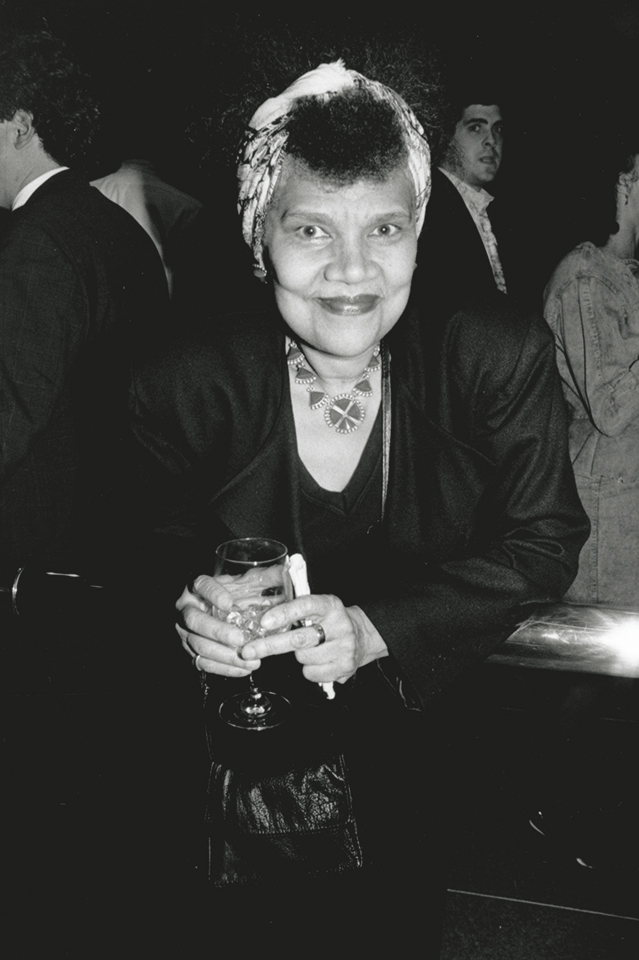
Portrait of O’Grady by Star Black.
From wbur, The Davis Museum celebrates the multiplicity of Lorraine O’Grady, Arielle Gray (2024)
“…she has crafted her own world that does show us who she was and who she is becoming, in all of her multiplicity and nuance.”
“We see O’Grady and Blackness as both the artist and the subject. We see O’Grady go beyond the critique and firmly into the realm of making.”
“Most would say that O’Grady entered the art world later in life (she was in her 40s when she staged some of her first performances), but O’Grady would probably argue that she was an artist all along.”
– wbur, link here
From Simplebooklet, Teaching/Learning with Lorraine O’Grady’s Both/And, Edited by Lorraine O’Grady and Amanda Gilvin (2024)
“[O’Grady’s work] has broken new ground in insisting our society needs to become more expansive, and the art world must embrace Black artists and Black subjects. Her work is full of humanity, humor, beauty, and joy.” —Paula Johnson, President of Wellesley College
“I conceive of O’Grady within…a continuum, one of Jamaican women—like Grace Jones, Adrian Piper, Louise ‘Miss Lou’ Bennet—who have made evocative, exploratory artworks, and staged events using their bodies, voices and other materials to tantalize or provoke a chosen audience, at home or in the diaspora.” —Rianna Jade Parker, writer, curator and researcher
“…O’Grady refuses to freeze the relationship between contemporary African-American women and ancient Egypt within the frame of her work.” —Carol Doughtery, Professor of Classical Studies
“The renowned conceptual artist and cultural critic Lorraine O’Grady has made transformational contributions to the fields of contemporary art, art history, literature, feminist studies, African Diaspora studies, and more.” —Amanda Gilvin, curator
– Simplebooklet, link here
From Wellesley Magazine, An Artist Comes Home, Kerry Gaertner Gerbracht (2024)
“While Mlle Bourgeoise may be her best-known work, O’Grady has been a fearless, groundbreaking figure for more than four decades, although for much of that time, she was at the edge of the art world.”
“Her work stands at the cross section of visual art, performance art, and profound philosophical writing, and in the era of major social movements such as Black Lives Matter, it is more relevant than ever. It challenges mainstream and largely white narratives about contemporary art and pushes museums to reconsider the narratives of white supremacy and sexism that they, often passively, reinforce with their exhibitions and objects on display.”
– Wellesley Magazine, link here
From Press Release Announcing the 2024 Guggenheim Fellows – John Simon Guggenheim Memorial Foundation (2024)
“A conceptual multi-disciplinary artist who is reviving an old persona for a new performative work project.”
– Guggenheim Foundation, link here
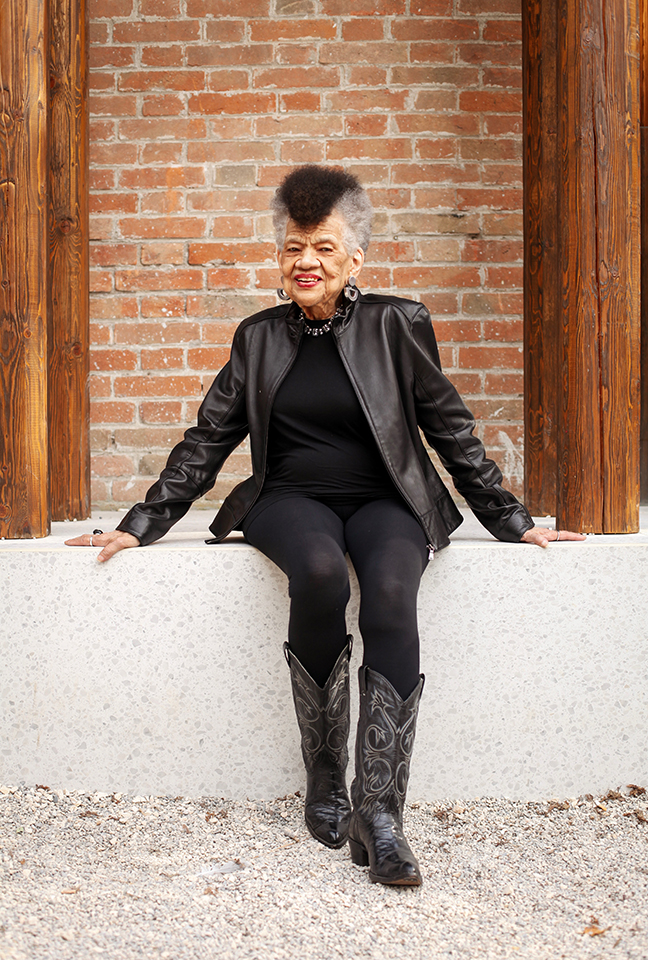
O’Grady in Venice, 2022.
From Harper’s Bazaar, The Audacity of Lorraine O’Grady, Soraya Nadia McDonald (2024)
“O’Grady has been dreaming impossible dreams, fighting unbeatable foes, and slaying metaphorical dragons for years.”
“O’Grady is a bona fide punk-rock star in the art world.”
“…within Lancela Palm-and-Steel lives O’Grady’s own history—her sometimes quixotic-seeming efforts to shift the art world; her capacity for trolling; her refusal to take herself too seriously; and her rejection of exceptionalism, hierarchy, and pretension.”
“Though O’Grady’s work has been described as multidisciplinary, curator and writer Kimberly Drew prefers the term multimodal: It expands to fill the crevices created by trying to place it into more discrete categories.”
“She was one of one in her time in terms of what she was trying to do. In terms of using her body as a canvas, of embodying this perceived very eccentric performance-art space at a time when the art world was saying, ‘Look, if you’re Black, you need to make your work literal. We want photography. We want literal observations of your experience. We don’t want metaphor. We don’t deal in metaphor when it comes to unpacking your lived experience.'” —Zawe Ashton, filmmaker, actress, and playwright
“Perhaps what is most profound—and also most difficult to quantify—about O’Grady’s work is the way it has reshaped what is considered normative or even permissible for artists, especially artists who are Black women like her.”
– Harper’s Bazaar, link here
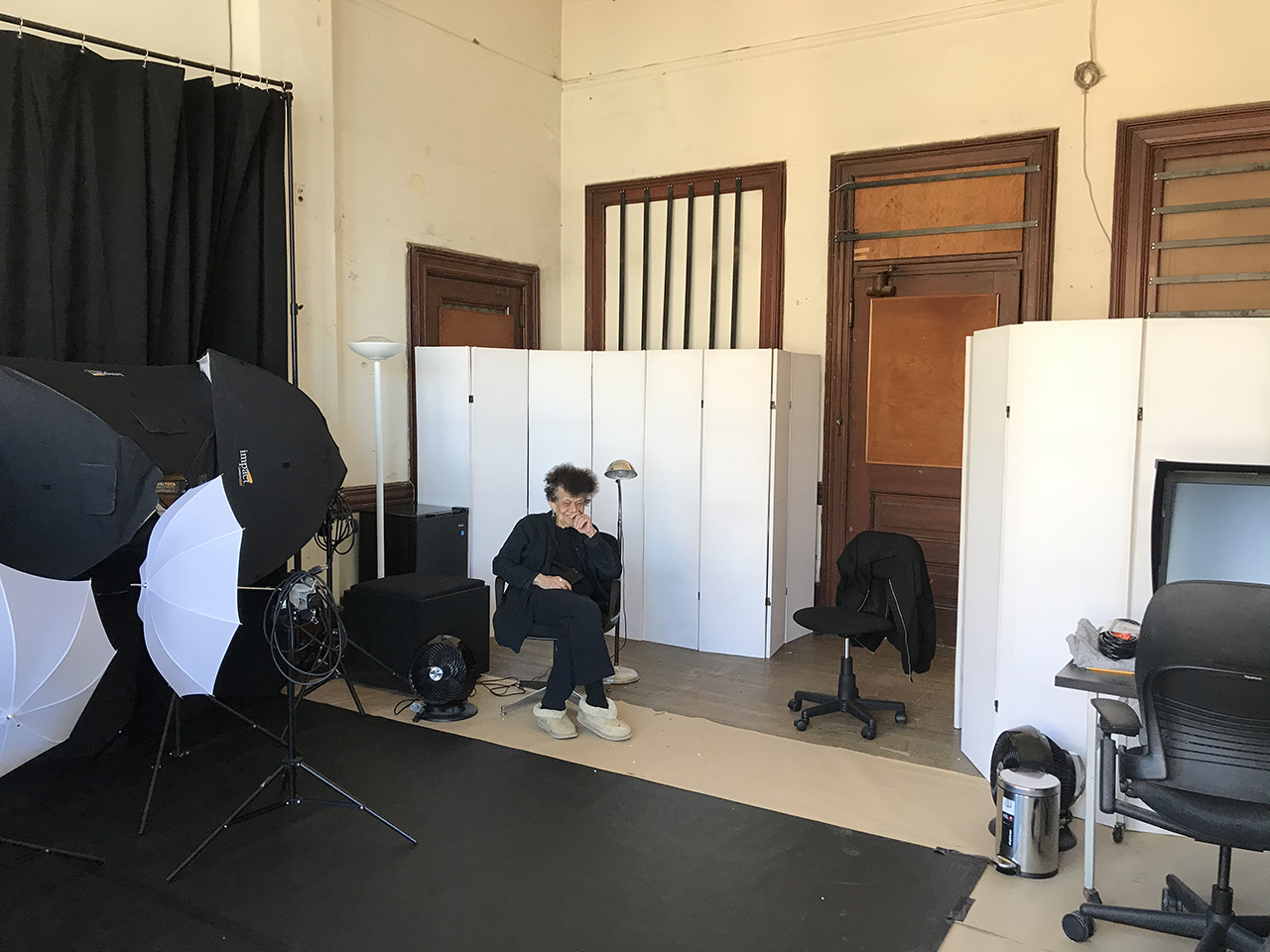
O’Grady in her Westbeth studio, March 9, 2020. Photograph by Robert Ransick.
From Ayana V. Jackson Instagram post (2024)
“In this moment we have only to look over one shoulder or the other to find someone to hold our hand or exchange an encouraging glance. THAT is a gift Lorraine O’Grady gave and continues to give to us. She stood alone so we can stand together… And on our own. The glass she broke continues to shatter.”
– Ayana V. Jackson, link here
From PBS News Hour, Acclaimed artist Lorraine O’Grady on her long path into art world acceptance, Jared Bowen (2024)
“In her work and in life, artist Lorraine O’Grady has long confronted a world of black and white, as in either/or thinking, as in her own art-making, but also in racism, including what she experienced working at the Bureau of Labor Statistics in the 1950s.” –Tamara Keith, reporter
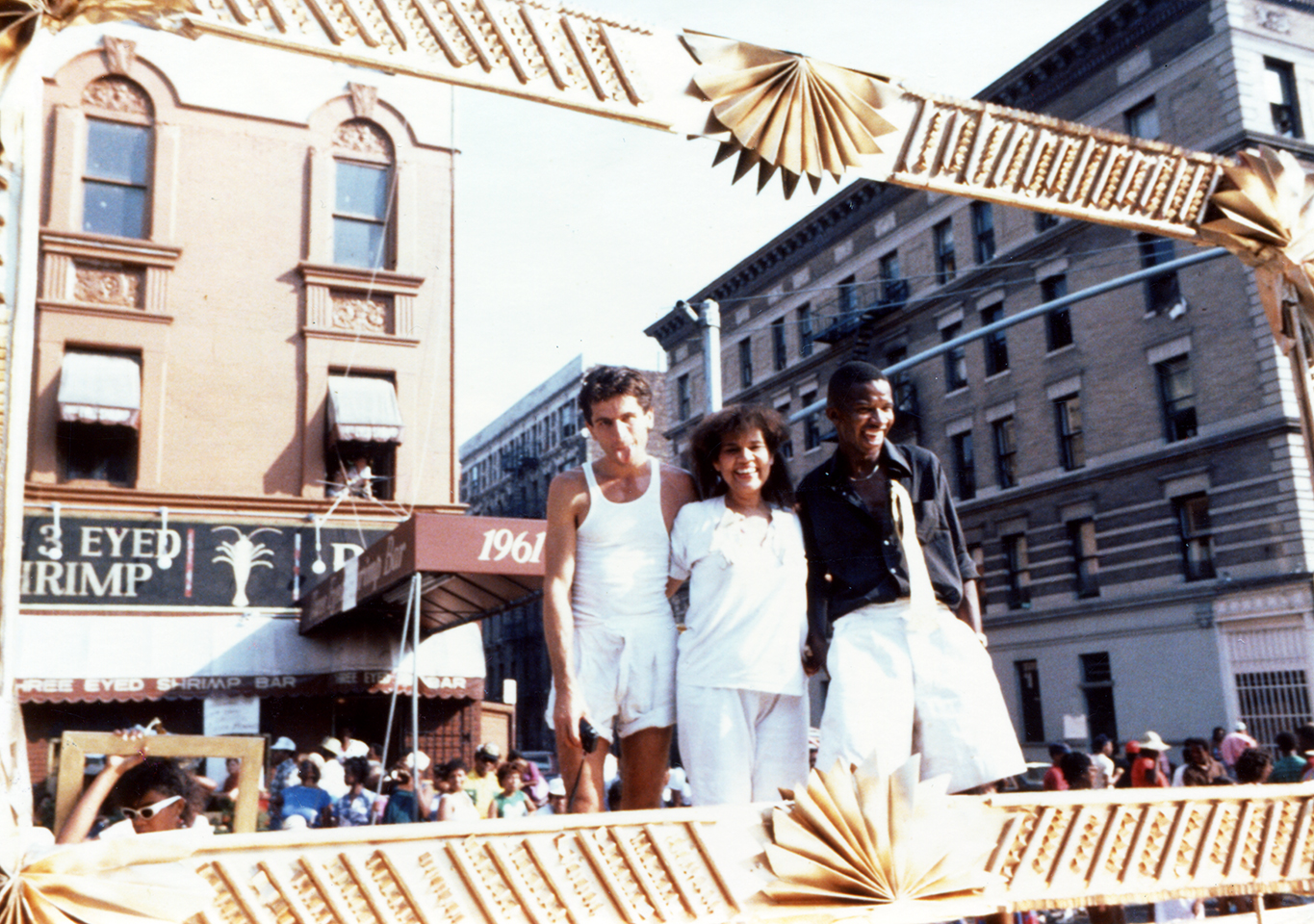
“Gallery after gallery reveals O’Grady’s argument that the world is so much more than black and white. Cross-pollination courses through her work, the trunk of a palm tree crowned by fir tree branches, a family album that features Egyptian Queen Nefertiti alongside the artist’s sister Devonia, Harlem parade attendees suddenly framed as art.” –Jared Bowen, reporter
“So are they simply joyous bystanders or the subject of a portrait? Is it a fir tree or palm tree, royalty or family? The answer, as O’Grady has argued time and again, is Both/And, the name of this show.” –Jared Bowen, reporter
– PBS News Hour, link here
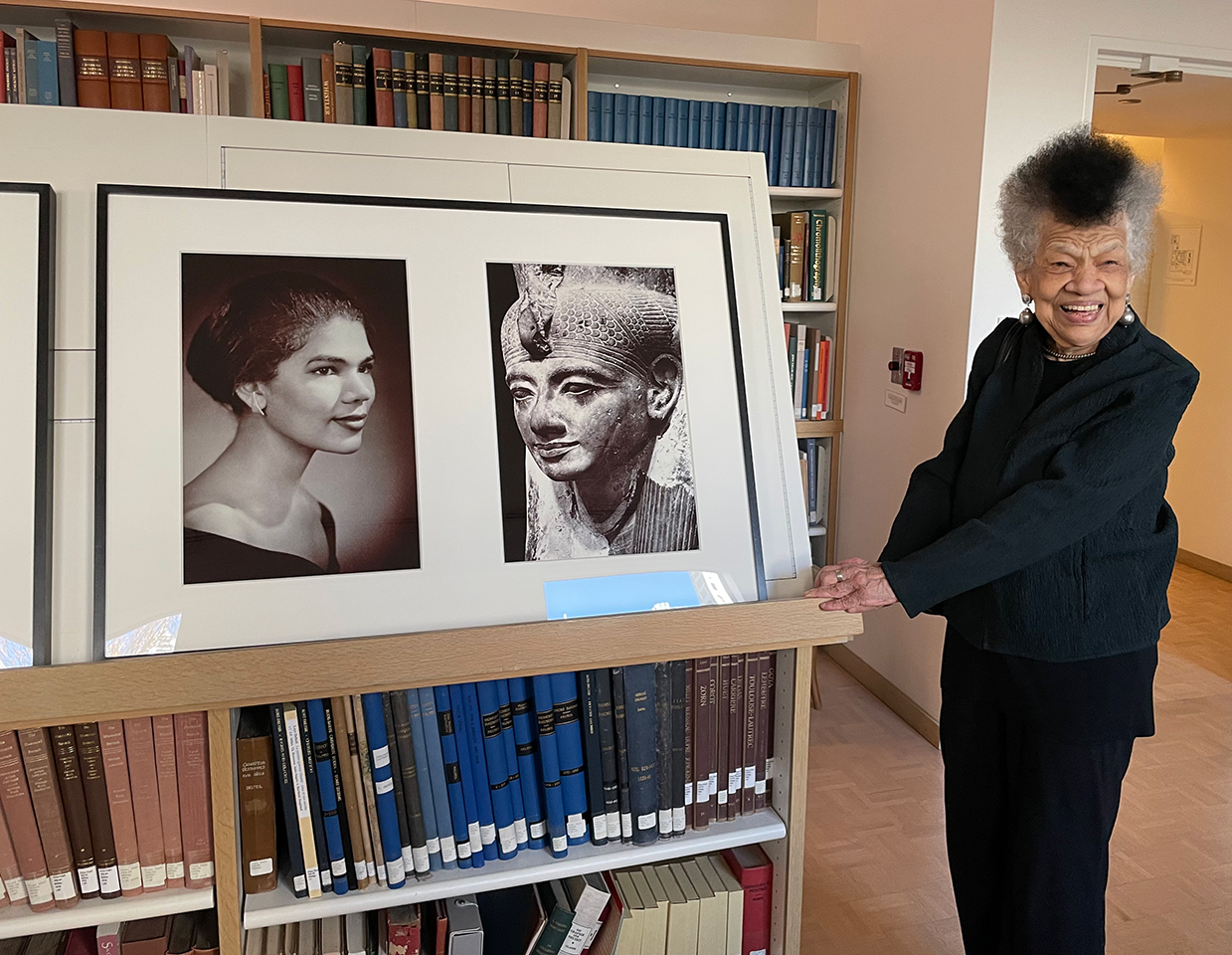
Lunch honoring O’Grady at the Art Institute of Chicago in 2023 hosted by James Rondeau, the President and Eloise W. Martin Director at the Art Institute of Chicago. Photograph by Robert Ransick.